Understanding IoT Connectivity Pricing Models for Businesses
As businesses increasingly rely on the Internet of Things (IoT) for operational efficiency, understanding IoT connectivity pricing models has become crucial. Various factors, including the type of IoT SIM used, data plans, and overall business needs, influence IoT SIM costs. Evaluating these components can help organizations make informed decisions that optimize their IoT deployments while managing expenses effectively. In this guide, we will explore how to assess the costs associated with IoT SIMs and connectivity rates.

IoT Connectivity Pricing Models and Evaluation
Powerful features designed for modern teams
Understanding IoT Data Pricing Models
When considering IoT connectivity, businesses have several data pricing models to choose from, including pay-as-you-go, pooled data, and flat-rate plans. Pay-as-you-go is ideal for businesses with fluctuating data needs, as they only pay for what they use. Pooled data plans allow multiple SIMs to share a data allowance, which is cost-effective for companies with numerous devices that consume data at varying rates. Flat-rate plans provide simplicity and predictability, charging a fixed monthly fee regardless of usage, which can be advantageous for budgeting purposes.

Factors Affecting IoT SIM Pricing
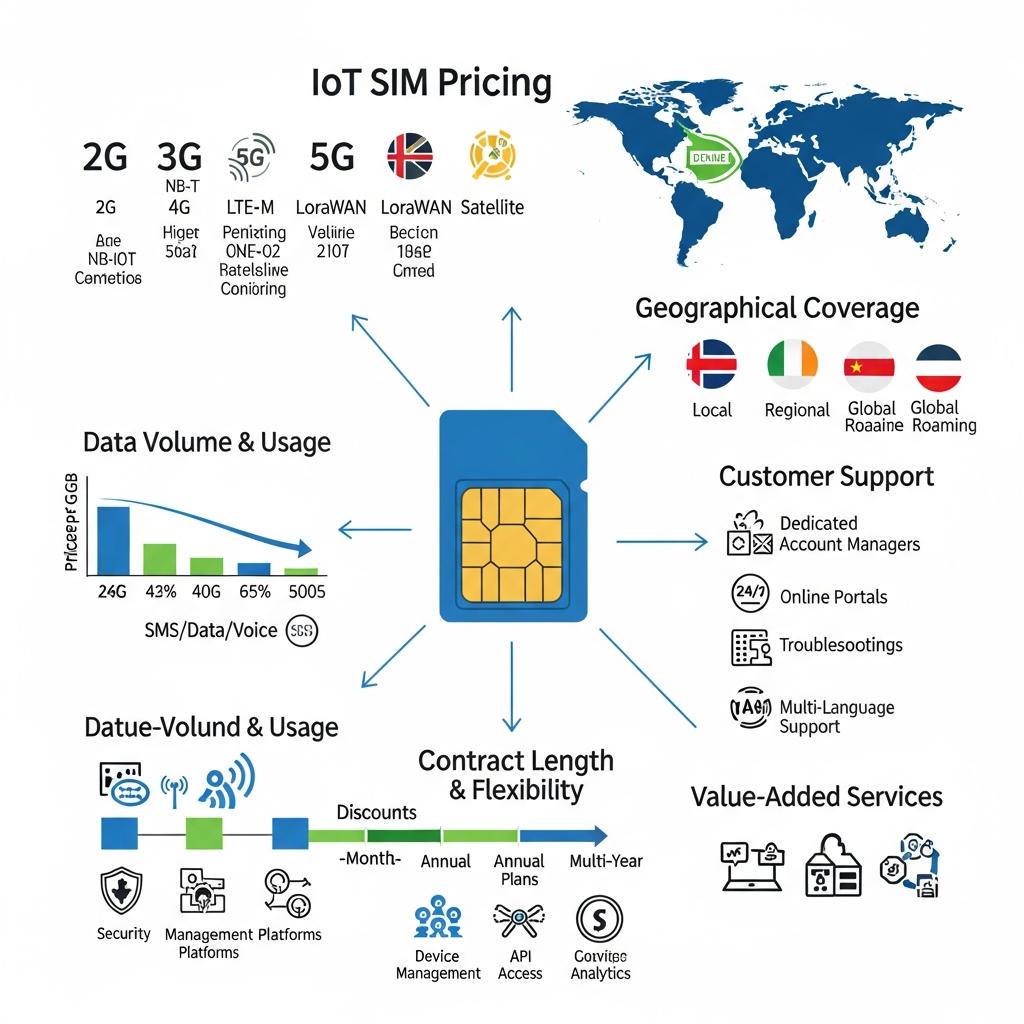
The price of IoT SIM cards is influenced by several factors, including the type of network technology used, geographical coverage, and data bandwidth requirements. For example, networks that utilize advanced technologies such as 5G may come at a higher cost, but they offer faster speeds and greater capacity for connected devices. Additionally, roaming capabilities and the level of support from the service provider play significant roles in determining overall cost. Understanding these variables enables businesses to seek the best IoT SIM cost for their specific applications.
Calculating Total Cost of Ownership for IoT Connectivity
To fully grasp IoT connectivity pricing, businesses must calculate the total cost of ownership (TCO), which encompasses not just the IoT SIM costs but also installation, maintenance, and potential scaling needs. TCO analysis helps enterprises project long-term expenses and identify potential savings over time. It is essential to factor in unexpected costs, such as hardware upgrades or service changes, to gain a comprehensive understanding of the financial commitments involved. This holistic view enables businesses to make more strategic decisions regarding their IoT connectivity solutions.

Frequently Asked Questions
The common pricing models include pay-as-you-go, pooled data plans, and flat-rate plans.
Evaluate IoT SIM costs by analyzing the type of network, data usage patterns, and service options.
IoT SIM pricing is affected by network technology, geographical coverage, and data requirements.
Pay-as-you-go pricing allows businesses to pay only for the data they use, ideal for variable needs.
Pooled data pricing allows multiple SIMs to share a common data allowance, reducing costs for multiple devices.
Find Our Office
Ready to Transform Your Business?
Join thousands of companies already using our platform