Affordable IoT Data Pooling Price Plans for Businesses
In today's fast-paced digital landscape, businesses are increasingly relying on IoT devices to streamline operations and gather essential data. To maximize efficiency, savvy organizations are turning to IoT data pooling options that allow for shared IoT SIM data across multiple devices. With smart solutions like pooled IoT data plans, businesses can significantly reduce their connectivity costs while maintaining high-performance levels. Shared data IoT SIMs are an economical way to manage costs while ensuring that all devices remain connected and operational. The main benefit of employing a pooled IoT data strategy is the inherent cost savings compared to traditional individual device plans. Data pooling IoT allows multiple devices to share a single data allowance, reducing the total monthly expenses and providing flexibility. Determining the right size for your data pool is crucial, as this ensures optimized usage without overspending. Businesses deploying numerous IoT devices can especially benefit from the efficiencies of pooled IoT data pricing, yielding both performance and budget advantages.
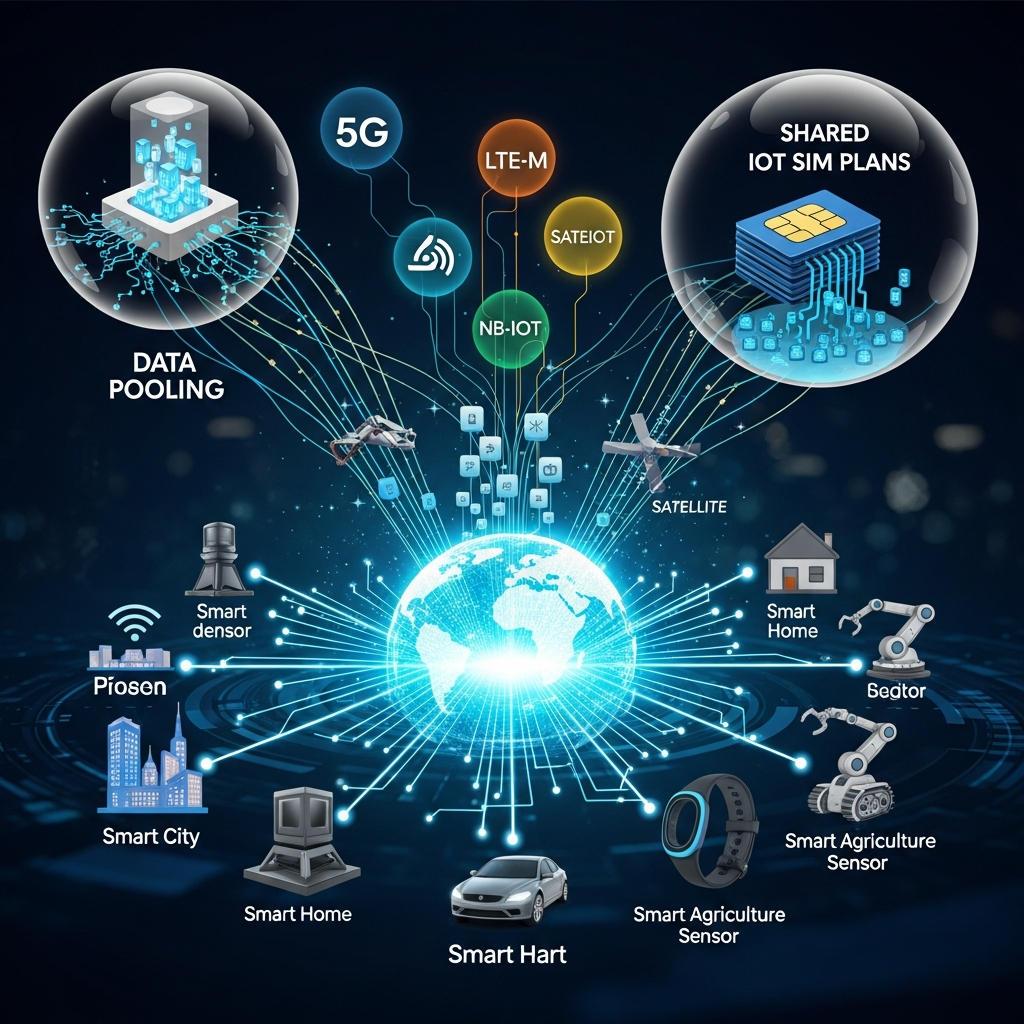
Understanding IoT Data Pooling and Its Benefits
Powerful features designed for modern teams
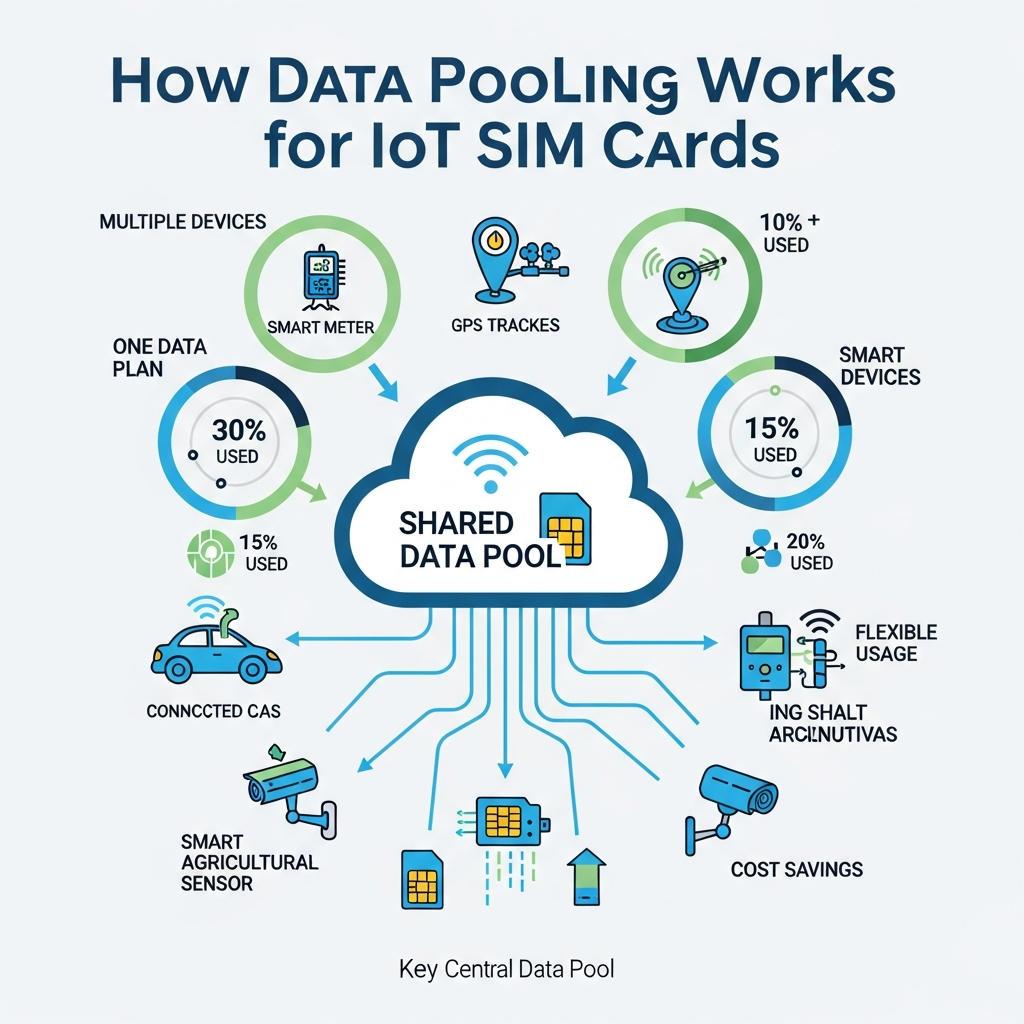
How Data Pooling Works for IoT SIM Cards
Data pooling enables multiple IoT devices to access a collective data allowance through a shared IoT SIM. Instead of each device having its own plan, businesses can utilize a single pooled data plan that dynamically distributes the data usage based on demand. This approach enhances flexibility, allowing businesses to scale their device connectivity without incurring the prohibitive costs associated with individual plans. Moreover, pooled IoT data plans seamlessly integrate with remote SIM provisioning models, ensuring easy management and control over your devices.
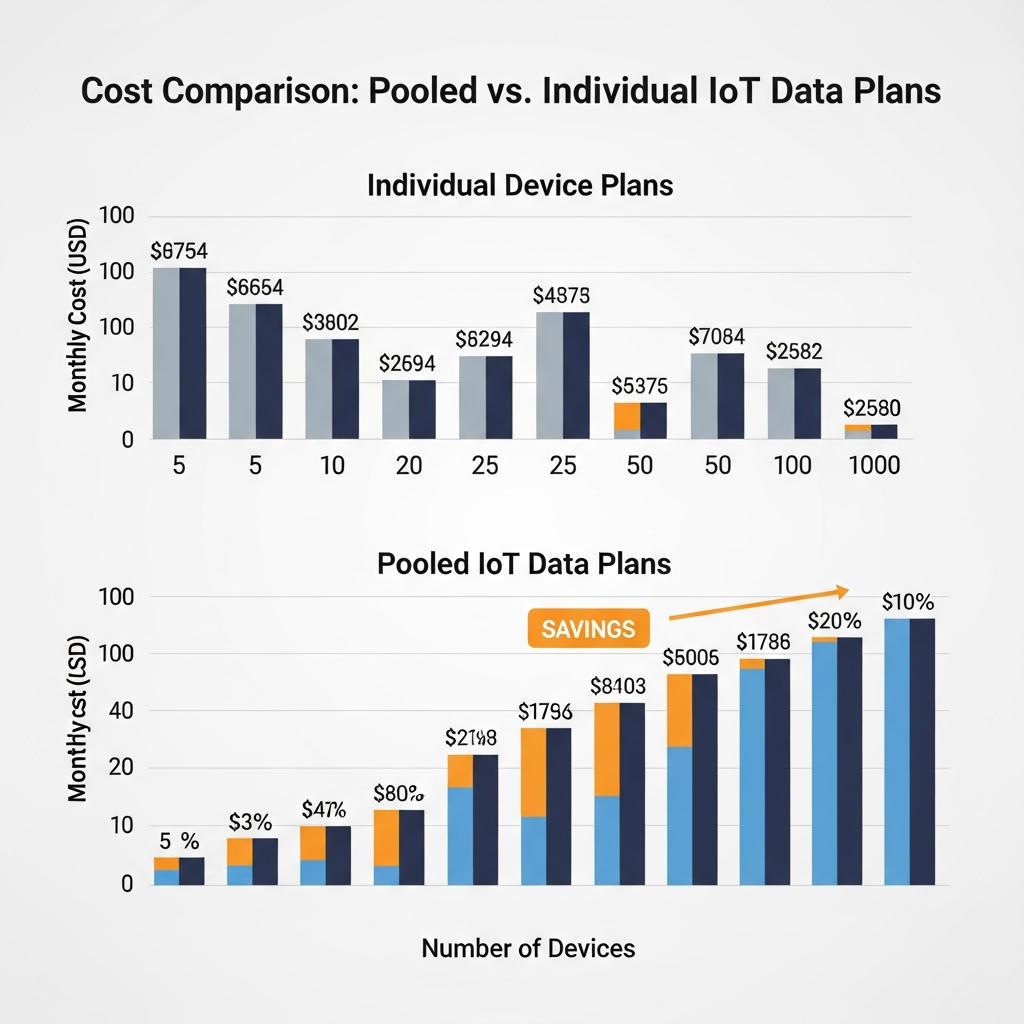
Cost Advantages of Pooled Plans Over Individual Plans
Pooled IoT data plans offer substantial cost savings by combining the data needs of multiple devices into a single payment plan. With individual plans, businesses often find themselves paying for unused data allocations or incurring excess charges if a device exceeds its limit. By contrast, data pooling enables users to optimize their data usage, as the overall pool can flexibly accommodate high-demand devices while low-usage devices benefit from available data. In essence, businesses can better forecast and control their IoT connectivity expenses through cost-effective pooled data pricing.
Estimating the Right Pool Size for Your Devices
Determining the appropriate size for an IoT data pool is essential for maximizing the benefits of a pooled plan. Businesses should assess their current device usage and projected growth to gauge the data requirements accurately. Key factors to consider include peak usage times, device usage patterns, and the number of devices in active use. With the right data pool size, organizations can ensure sufficient coverage for all devices while eliminating unnecessary costs associated with over-provisioning.

Frequently Asked Questions
IoT data pooling refers to the practice of combining the data allowances of multiple IoT devices into a single shared plan, maximizing resource efficiency.
Shared data IoT SIMs reduce costs by enabling multiple devices to draw from a common data pool, minimizing individual plan expenses.
Pooled plans generally offer lower costs compared to individual plans, as they reduce billing complexity and allow organizations to optimize their data usage.
Evaluate the current and projected usage of your devices by considering peak demand times and usage patterns to determine an appropriate pool size.
Businesses with numerous devices or those experiencing variable usage patterns, such as utilities, logistics, and smart cities, often benefit significantly from pooled pricing.
Find Our Office
Ready to Transform Your Business?
Join thousands of companies already using our platform